AI Electrical Estimating Software
Published: 20 Jul 2026
Preparing accurate electrical estimates takes time, attention to detail, and industry experience. Estimators must calculate material quantities, labor costs, equipment expenses, and project timelines before submitting a bid. Even a small mistake can affect profitability and project success.
Artificial intelligence is changing this process. Modern AI electrical estimating software helps contractors analyze drawings, automate takeoffs, calculate costs, and create estimates much faster than traditional methods. Instead of spending hours manually reviewing plans, estimators can use AI-powered tools to speed up their workflow and improve accuracy.
As competition in the construction industry increases, many electrical contractors are adopting AI estimating solutions to save time, reduce errors, and submit more bids. Recent industry reviews highlight STACK, Countfire, Trimble Accubid, McCormick, and Togal. AI is a leading option for electrical estimating and takeoff automation.
In this guide, you’ll learn how AI electrical estimating software works, its key features, benefits, limitations, and the best tools available in 2026.
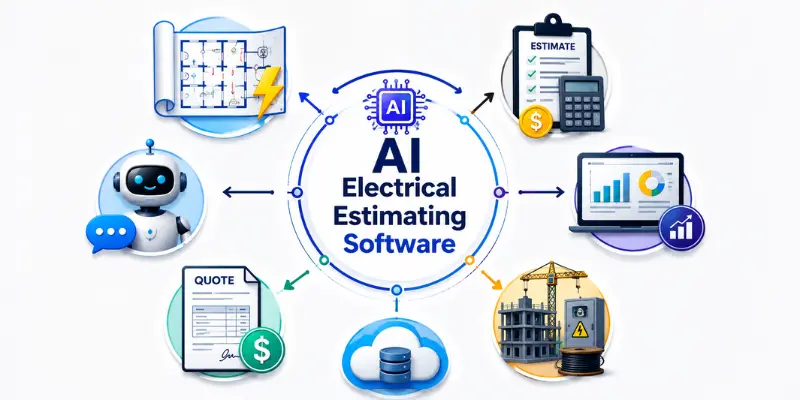
Quick Answer: What Is AI Electrical Estimating Software?
AI electrical estimating software uses artificial intelligence to help electrical contractors create faster and more accurate project estimates. These tools can analyze blueprints, automate quantity takeoffs, estimate labor and material costs, and assist with bid preparation. Many modern platforms also use machine learning and automation to reduce manual work and improve estimating efficiency.
How It Differs From Traditional Estimating Software
Traditional estimating software depends heavily on manual work. Users must identify items, perform takeoffs, and enter data themselves.
AI estimating software automates much of this process.
| Feature | Traditional Software | AI Estimating Software |
| Takeoffs | Mostly Manual | Automated |
| Quantity Counting | User-Driven | AI-Assisted |
| Blueprint Analysis | Manual Review | AI Recognition |
| Estimate Creation | Time-Consuming | Faster |
| Productivity | Moderate | High |
Because of these capabilities, many contractors now use AI tools to increase efficiency and improve estimate accuracy.
How AI Electrical Estimating Software Works
Modern AI estimating software automates many tasks that traditionally required hours of manual work. Instead of reviewing every drawing by hand, estimators can upload project plans and let AI analyze the information automatically.
Most AI-powered estimating platforms follow a similar workflow.
AI Blueprint Analysis
The process starts when users upload electrical drawings or blueprints.
The AI scans the plans and identifies electrical symbols, fixtures, outlets, switches, panels, conduit runs, and other components. Advanced tools can recognize hundreds of symbols within minutes.
This automation reduces the time required for manual plan reviews.
Automated Quantity Takeoffs
After analyzing the blueprint, the software automatically counts materials and components.
Instead of manually counting symbols one by one, estimators receive a detailed quantity list almost instantly.
The software can identify:
- Lighting fixtures
- Power outlets
- Switches
- Panels
- Conduit runs
- Cable quantities
This feature significantly speeds up the estimating process.
Material Cost Calculations
Once the takeoff is complete, the software calculates material requirements.
Many platforms connect with supplier databases and pricing catalogs. This allows estimators to generate more accurate material costs based on current market prices.
As a result, contractors can prepare bids more confidently.
Labor Cost Estimation
Labor often represents a large portion of an electrical project’s cost.
AI software helps estimators calculate labor hours using historical project data, labor units, and industry standards.
Some advanced platforms also recommend labor requirements based on project complexity and installation type.
Bid and Proposal Generation
After calculating quantities, materials, and labor, the software generates a complete estimate.
Many tools can also create:
- Bid proposals
- Cost breakdown reports
- Project summaries
- Scope documents
This automation helps contractors prepare professional bids in less time.
Key Features of AI Electrical Estimating Software
Not all estimating platforms offer the same capabilities. However, the best AI electrical estimating software typically includes the following features.
- AI-Powered Takeoff Automation: Automatically identifies and counts electrical components from project drawings.
- Electrical Symbol Recognition: Detects outlets, switches, fixtures, panels, and other electrical symbols.
- Automated Quantity Takeoffs: Generates material quantities without manual counting.
- Material Cost Estimation: Calculates material costs using current pricing data.
- Labor Cost Calculation: Estimates labor hours and workforce requirements.
- Blueprint Analysis: Analyzes electrical plans and extracts important project information.
- Bid and Proposal Generation: Creates professional estimates and bid documents quickly.
- Real-Time Cost Databases: Uses updated supplier and material pricing information.
- Cloud Collaboration: Allows team members to access and work on estimates from anywhere.
- Change Order Management: Updates estimates when project requirements change.
- Reporting and Analytics: Generates detailed reports and cost analysis.
- Project Tracking: Helps monitor estimating progress and project costs.
- Software Integration: Connects with accounting, BIM, and project management tools.
- Data Storage and Backup: Stores project information securely in the cloud.
- Custom Templates: Allows users to create and reuse estimating templates.
Best AI Electrical Estimating Software in 2026
The market now offers dozens of estimating tools, but only a few provide strong automation, accurate takeoffs, and electrical-specific features.
The best choice depends on your business size, project type, and estimating workflow. Some tools focus on AI-powered takeoffs, while others provide complete estimating and project management solutions. Industry reviews frequently mention STACK, Countfire, Trimble Accubid, McCormick, and Togal.AI among the leading options for electrical contractors.
1. STACK
STACK is a cloud-based estimating and takeoff platform designed for construction professionals.
Many contractors choose STACK because it combines digital takeoffs, estimating, and collaboration tools within a single platform. It works well for businesses that handle multiple trades rather than electrical work alone.
Best For: Multi-trade contractors and construction companies
Key Features
- Cloud-based estimating
- Digital takeoffs
- Team collaboration tools
- Real-time project access
- AI-assisted workflows
Pros
- Easy to use
- Cloud accessibility
- Supports multiple construction trades
Cons
- Fewer electrical-specific features than specialized tools
2. Countfire
Countfire focuses specifically on electrical estimating.
The software automatically identifies and counts electrical symbols from drawings. Estimators often use it to reduce takeoff time and improve consistency across projects.
Best For: Electrical contractors performing high-volume takeoffs
Key Features
- Automated symbol counting
- PDF drawing analysis
- Cloud-based platform
- Audit and verification tools
Pros
- Fast takeoff process
- Built specifically for electrical estimating
- Reduces manual counting
Cons
- Less suitable for non-electrical trades
3. Trimble Accubid Anywhere
Trimble Accubid remains one of the most recognized names in electrical estimating.
Large contractors often use it because it offers extensive databases, labor calculations, and enterprise-level estimating capabilities.
Best For: Mid-sized and large electrical contractors
Key Features
- Electrical estimating database
- Labor calculation tools
- BIM integration
- Supplier pricing support
Pros
- Powerful estimating features
- Industry reputation
- Strong database capabilities
Cons
- Higher learning curve
- More expensive than some alternatives
4. McCormick Electrical Estimating
McCormick has served electrical contractors for decades.
The platform provides electrical-specific estimating features, supplier pricing integrations, and extensive material databases. Many contractors use it for commercial and service projects.
Best For: Small and medium-sized electrical businesses
Key Features
- Electrical material databases
- Labor calculations
- Supplier integrations
- Pre-built assemblies
Pros
- Built specifically for electrical work
- Strong industry experience
- Reliable estimating tools
Cons
- Limited AI automation compared to newer platforms
5. ConEst IntelliBid
ConEst IntelliBid focuses on electrical estimating and project costing.
The platform includes extensive assemblies, pricing databases, and labor calculation tools that help contractors create detailed estimates. Community discussions often recommend IntelliBid for companies that require detailed reporting and large item libraries.
Best For: Commercial and industrial electrical contractors
Key Features
- Large estimating database
- Automated labor calculations
- Custom assemblies
- Detailed reporting
Pros
- Comprehensive estimating tools
- Strong reporting features
- Electrical-focused design
Cons
- Initial setup may require time
6. Togal.AI
Togal.AI uses artificial intelligence to automate construction takeoffs and quantity extraction.
The platform helps estimators identify project components and generate quantities directly from drawings. It has become increasingly popular among contractors looking for AI-powered automation.
Best For: Contractors seeking AI-driven takeoff automation
Key Features
- AI-powered takeoffs
- Quantity extraction
- Drawing analysis
- Cloud-based workflows
Pros
- Fast automation
- Modern interface
- Time-saving features
Cons
- May require verification for complex projects
AI Electrical Estimating Software Comparison
Here is the comparison table.
| Software | Best For | AI Features | Cloud-Based |
| STACK | Multi-trade contractors | AI-assisted workflows | Yes |
| Counterfire | Electrical takeoffs | Automated symbol counting | Yes |
| Trimble Accubid | Large contractors | Advanced estimating automation | Yes |
| McCormick | Electrical contractors | Limited AI features | Partial |
| ConEst IntelliBid | Commercial projects | Labor automation | Available |
| Togal.AI | AI-powered takeoffs | Advanced AI analysis | Yes |
Which Software Should You Choose?
The right software depends on your specific needs.
- Choose Countfire for faster electrical takeoffs.
- Choose STACK if you manage multiple construction trades.
- Choose Trimble Accubid for large and complex electrical projects.
- Choose McCormick for electrical-specific estimating workflows.
- Choose ConEst IntelliBid for advanced reporting and assemblies.
- Choose Togal. AI if AI automation is your top priority.
Before making a final decision, test a few platforms using actual project drawings. Most vendors offer demos or trial versions, allowing contractors to compare accuracy, usability, and workflow efficiency before investing. Industry discussions also suggest evaluating real project output rather than relying solely on feature lists.
Benefits of AI Electrical Estimating Software
AI electrical estimating software offers several advantages for contractors, estimators, and construction companies. These tools help teams work faster while improving estimate quality and consistency. Recent industry reports show that AI-powered estimating tools reduce manual work and improve productivity for estimating teams.
- Saves estimating time
- Improves estimate accuracy
- Reduces manual calculations
- Speeds up quantity takeoffs
- Minimizes human errors
- Increases bidding capacity
- Improves team productivity
- Supports better project planning
- Provides consistent estimates
- Helps reduce operational costs
Challenges and Limitations of AI Electrical Estimating Software
While AI offers many benefits, it also has limitations. Contractors should understand these challenges before relying heavily on automation.
- Requires human review
- Can misread complex drawings
- Software costs can be high
- Needs user training
- Accuracy depends on drawing quality
- Limited understanding of site conditions
- May require software integrations
- Relies on data quality
- Subscription fees can add up
- Cannot replace experienced estimators
Conclusion
AI electrical estimating software is transforming the way contractors prepare bids and manage estimating workflows. These tools automate time-consuming tasks such as blueprint analysis, quantity takeoffs, labor calculations, and cost estimation, allowing teams to work faster and more efficiently.
Solutions such as Countfire, STACK, Trimble Accubid, McCormick, ConEst IntelliBid, and Togal.AI help contractors improve productivity, reduce manual work, and increase estimating accuracy. However, the best results come from combining AI automation with human expertise.
As AI technology continues to advance, estimating software will become even more intelligent. Contractors who adopt the right tools and workflows today will be better prepared to compete in an increasingly digital construction industry.

- Be Respectful
- Stay Relevant
- Stay Positive
- True Feedback
- Encourage Discussion
- Avoid Spamming
- No Fake News
- Don't Copy-Paste
- No Personal Attacks
- Be Respectful
- Stay Relevant
- Stay Positive
- True Feedback
- Encourage Discussion
- Avoid Spamming
- No Fake News
- Don't Copy-Paste
- No Personal Attacks
