How To Implement AI
Published: 09 Aug 2026
Artificial intelligence is transforming the way businesses operate in 2026. Companies use Ai to automate workflows, improve customer service, analyze large amounts of data, and make faster decisions.
As Ai adoption continues to grow, many business owners and professionals want to know how to implement Ai effectively. While Ai offers many benefits, successful implementation requires more than simply choosing a tool.
Organizations need clear objectives, reliable data, the right technology, and a structured implementation plan. Without a proper strategy, Ai projects can become costly and fail to deliver the expected results.
The good news is that implementing Ai does not have to be complicated. By following the right process, businesses can integrate Ai into their operations and achieve measurable improvements in productivity, efficiency, and decision-making.
In this guide, you will learn how to implement Ai step by step, select the right Ai solutions, avoid common mistakes, and build a successful Ai strategy for long-term growth.
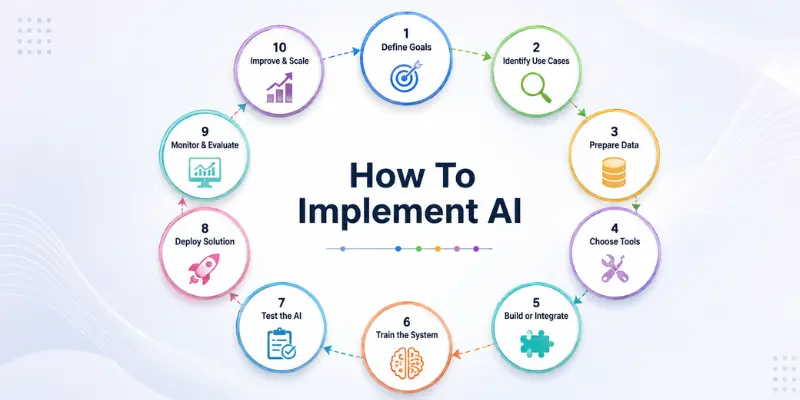
What Does It Mean To Implement Ai?
Implementing Ai means integrating artificial intelligence technologies into business processes, products, or services to solve specific problems or improve efficiency.
Common examples include:
- Ai chatbots for customer support
- Recommendation systems for e-commerce
- Predictive analytics for business forecasting
- Ai-powered content creation tools
- Fraud detection systems
Why Businesses Implement Ai
Organizations adopt Ai for many reasons.
Key Benefits
- Automates repetitive tasks
- Improves productivity
- Enhances customer experiences
- Reduces operational costs
- Supports data-driven decisions
- Improves accuracy
- Identifies trends and patterns
- Increases business efficiency
How To Implement Ai In A Company: Step-By-Step Process
Implementing Ai in a company requires careful planning and a clear strategy. Following a structured process can help businesses reduce risks and achieve better results.
1. Identify Business Problems And Goals
Start by identifying the challenges your company wants to solve with Ai.
Examples:
- Reduce customer support workload
- Improve sales forecasting
- Automate repetitive tasks
- Increase employee productivity
- Enhance customer experiences
Choose goals that provide measurable business value.
2. Evaluate Existing Processes
Review your current workflows and identify areas where Ai can make the biggest impact.
Common Areas For Ai Implementation:
- Customer service
- Marketing
- Sales
- Human resources
- Finance
- Operations
- Data analysis
Focus on processes that consume significant time and resources.
3. Assess Data Availability And Quality
Ai systems depend on data. Before implementation, ensure your company has accurate and reliable data.
Check For:
- Data accuracy
- Data completeness
- Data consistency
- Data security
- Data accessibility
High-quality data leads to better Ai performance.
4. Select The Right Ai Solution
Choose an Ai solution based on your company’s goals and requirements.
Popular Options Include:
- ChatGPT
- Microsoft Copilot
- Google Gemini
- Industry-specific Ai software
- Custom machine learning solutions
Select a tool that fits your budget and business needs.
5. Build A Small Pilot Project
Instead of implementing Ai across the entire company, start with a small pilot project.
Benefits Of A Pilot Project:
- Reduces risk
- Tests effectiveness
- Identifies challenges
- Minimizes costs
- Provides measurable results
This approach helps validate your Ai strategy before scaling.
6. Train Employees And Teams
Employees should understand how to use Ai tools effectively.
Provide training on:
- Ai capabilities
- Best practices
- Security policies
- Workflow integration
- Responsible Ai usage
Well-trained teams achieve better adoption rates.
7. Integrate Ai Into Existing Systems
Connect Ai tools with your current business software and workflows.
Examples:
- CRM platforms
- Customer support systems
- Marketing tools
- ERP software
- Data analytics platforms
Smooth integration improves efficiency and user experience.
8. Test And Optimize Performance
Before full deployment, test the Ai system carefully.
Evaluate:
- Accuracy
- Reliability
- Security
- User experience
- Business impact
Make adjustments based on test results.
9. Deploy Ai Across The Organization
Once testing is complete, roll out the Ai solution across relevant departments.
Monitor adoption and provide support during the transition period.
10. Monitor, Improve, And Scale
AI implementation is an ongoing process.
Regularly monitor:
- Performance metrics
- User feedback
- Business outcomes
- Return on investment (Roi)
Use the insights to improve the system and expand Ai adoption across the company.
Best Practices For Implementing AI
Follow These Best Practices
- Start with clear business goals
- Focus on high-value use cases
- Use high-quality data
- Choose the right Ai tools
- Train employees properly
- Monitor performance regularly
- Maintain data security
- Test before deployment
- Track return on investment (Roi)
- Improve systems continuously
Common Challenges Of Ai Implementation
Challenges Businesses May Face
- Poor data quality
- High implementation costs
- Lack of Ai expertise
- Integration difficulties
- Security concerns
- Resistance to change
- Regulatory compliance issues
- Unrealistic expectations
Understanding these challenges helps organizations prepare more effectively.
Who Should Implement Ai?
Ai can benefit organizations of all sizes.
Common Users
- Small businesses
- Large enterprises
- Healthcare providers
- Financial institutions
- Educational organizations
- Marketing agencies
- Retail companies
- Manufacturing businesses
Conclusion
Implementing Ai can help organizations improve efficiency, automate processes, and make better decisions. However, successful implementation requires careful planning, quality data, and clear objectives.
By following a structured approach, businesses can reduce risks and maximize the value of artificial intelligence. Whether you are a small business owner or a large enterprise, starting with the right strategy can make Ai implementation smoother and more successful.
FAQS
Implement Ai by defining goals, identifying use cases, preparing data, selecting tools, testing solutions, and continuously monitoring performance.
Costs vary depending on the solution. Many cloud-based Ai tools offer affordable options for small businesses.

- Be Respectful
- Stay Relevant
- Stay Positive
- True Feedback
- Encourage Discussion
- Avoid Spamming
- No Fake News
- Don't Copy-Paste
- No Personal Attacks
- Be Respectful
- Stay Relevant
- Stay Positive
- True Feedback
- Encourage Discussion
- Avoid Spamming
- No Fake News
- Don't Copy-Paste
- No Personal Attacks
