Is Artificial Intelligence Easy to Learn in 2026?
Published: 02 Aug 2026
Artificial intelligence is everywhere today. People use AI to write content, create images, answer questions, analyze data, and automate tasks. As AI becomes more popular, many beginners ask the same question:
Is AI easy to learn?
The simple answer is yes. Most people can learn the basics of AI without a technical background. You do not need to be a programmer or a computer scientist to understand how AI works or use AI tools effectively.
However, the difficulty depends on your goals. Learning to use AI is much easier than building AI systems from scratch.
This guide explains how easy it is to learn AI, the challenges beginners face, and the best way to start learning AI in 2026.
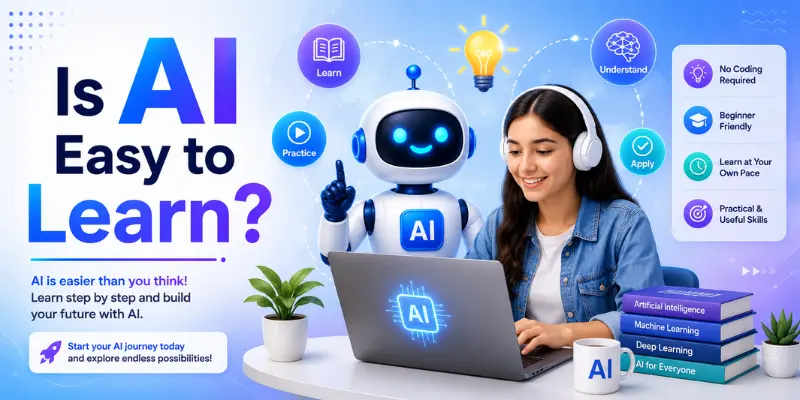
The Short Answer: Is AI Easy to Learn?
Yes, AI is easy to learn at the beginner level.
Today, thousands of free resources, courses, videos, and AI tools make learning easier than ever. Most beginners can understand basic AI concepts within a few weeks and start using AI tools almost immediately.
If your goal is to:
- Use ChatGPT
- Create AI images
- Write better prompts
- Automate simple tasks
- Improve productivity
Then learning AI is relatively easy.
If you want to become an AI engineer or machine learning developer, you will need more time, practice, and technical knowledge.
Why AI Feels Difficult at First
Many beginners think AI is complicated before they even start learning it. The main reason is that AI introduces new concepts and unfamiliar terms.
Common Challenges for Beginners
- Technical terminology
- Fear of coding
- Mathematics concerns
- Information overload
- Too many learning resources
- Unclear learning paths
The good news is that most of these challenges disappear once you start learning step by step.
Why AI Is Easier to Learn Than Ever
Learning AI in 2026 is much easier than it was a few years ago. Modern AI tools allow beginners to gain practical experience without understanding complex algorithms.
What Makes AI Easier Today?
- Free online courses
- Beginner-friendly tutorials
- No-code AI platforms
- AI-powered learning assistants
- Interactive learning tools
- Large online communities
You can now learn AI from your phone, laptop, or tablet without spending a lot of money.
Do You Need Coding to Learn AI?
This is one of the most common questions beginners ask. The answer depends on what you want to do with AI.
If You Want to Use AI
You do not need coding. Many people use AI tools every day without writing a single line of code.
Examples include:
- ChatGPT
- Gemini
- Claude
- Canva AI
- Grammarly
- Notion AI
If You Want to Build AI
Coding becomes important. Most AI developers learn:
- Python
- Machine Learning
- Data Analysis
- Neural Networks
- Deep Learning
While coding is useful for advanced AI development, it is not required to start learning AI.
How Long Does It Take to Learn AI?
There is no single answer because everyone learns at a different pace. However, most beginners follow a similar learning journey.
| Learning Goal | Estimated Time |
| Understand AI basics | 2–4 weeks |
| Use AI tools confidently | 1–2 months |
| Learn prompt engineering | 1–3 months |
| Build simple AI projects | 3–6 months |
| Become job-ready in AI | 6–12 months |
Consistency matters more than speed.
Even 30 minutes of daily learning can produce excellent results over time.
Best Ways to Start Learning AI
Many beginners try to learn everything at once. This often creates confusion.
Instead, follow a simple learning path.
1. Learn Basic AI Concepts
Start with topics such as:
- What is AI?
- Machine Learning
- Generative AI
- AI Applications
- AI Ethics
Do not worry about advanced technical details at first.
2. Use AI Tools Daily
The best way to learn AI is to use it.
Try:
- ChatGPT
- Gemini
- Claude
- Canva AI
- Copilot
Practical experience helps concepts make more sense.
3. Practice Prompt Writing
Prompt writing is one of the most valuable AI skills today.
Learn how to:
- Ask clear questions
- Give detailed instructions
- Refine AI responses
- Generate better results
4. Explore Real-World Applications
See how AI is used in:
- Education
- Healthcare
- Marketing
- Business
- Content Creation
- Customer Support
Understanding practical applications makes learning more interesting.
5. Take a Beginner-Friendly Course
Structured learning often works better than random videos. Choose one course and follow it consistently.
Benefits of Learning AI
Learning AI can help you personally and professionally.
Key Benefits
- Improves productivity
- Saves time on routine tasks
- Creates new career opportunities
- Enhances problem-solving skills
- Supports business growth
- Improves digital skills
- Helps you stay competitive
- Increases future job opportunities
AI is becoming an important skill in many industries.
Common Mistakes Beginners Make
Many people make learning harder than it needs to be.
Avoid These Mistakes
- Trying to learn everything at once
- Skipping the basics
- Focusing only on theory
- Avoiding hands-on practice
- Comparing yourself to experts
- Switching between too many courses
- Expecting instant results
Learning AI is a journey, not a race.
Who Can Learn AI?
Almost anyone can learn AI.
You do not need:
- A computer science degree
- Advanced mathematics
- Programming experience
- Technical work experience
Many students, teachers, freelancers, marketers, business owners, and professionals successfully learn AI every year. The most important requirement is a willingness to learn.
Conclusion
So, is AI easy to learn? For most beginners, the answer is yes. Learning AI has never been more accessible. You can start with simple concepts, use beginner-friendly AI tools, and gradually build your knowledge over time. You do not need advanced technical skills to begin your AI journey.
If your goal is to use AI for work, study, or personal projects, you can start seeing results within a few weeks. More advanced paths, such as machine learning and AI development, require additional effort, but they remain achievable with consistent practice.
My recommendation is simple: start small, stay consistent, and use AI tools regularly. Every expert was once a beginner, and the best time to start learning AI is today.
Frequently Asked Questions
Yes. You can learn AI basics and use many AI tools without coding. Platforms like ChatGPT, Gemini, Canva AI, and Grammarly allow beginners to use AI through simple interfaces. However, coding becomes important if you want to build AI applications or develop machine learning models.
The learning time depends on your goals. Most beginners can understand basic AI concepts within 2–4 weeks. Learning practical AI skills may take a few months, while becoming proficient in AI development can take six months or longer.
Yes. Many people learn AI from home using online courses, tutorials, videos, and AI tools. With consistent practice and the right learning resources, beginners can build strong AI knowledge without attending formal classes.
Not necessarily. Using AI tools is often easier than traditional programming because many platforms require little or no coding. However, developing AI systems and machine learning models can be more complex than general programming.
The easiest way to learn AI is to start with the basics and use AI tools regularly. Learn simple concepts, practice prompt writing, and explore beginner-friendly platforms before moving to advanced topics.
Yes. Students can learn AI regardless of their academic background. Many beginner-friendly resources explain AI concepts in simple language, making it easier for students to start learning and applying AI skills.
Basic AI learning does not require advanced mathematics. However, if you plan to study machine learning, deep learning, or AI development, understanding statistics, probability, and algebra can be helpful.
ChatGPT is one of the best AI tools for beginners because it is easy to use and helps users learn through conversation. Other beginner-friendly options include Gemini, Claude, Canva AI, and Microsoft Copilot.

- Be Respectful
- Stay Relevant
- Stay Positive
- True Feedback
- Encourage Discussion
- Avoid Spamming
- No Fake News
- Don't Copy-Paste
- No Personal Attacks
- Be Respectful
- Stay Relevant
- Stay Positive
- True Feedback
- Encourage Discussion
- Avoid Spamming
- No Fake News
- Don't Copy-Paste
- No Personal Attacks
